

Automation in the Automotive Industry: The Future Is Already Underway
The automotive industry is undergoing one of the most profound transformations since Henry Ford's assembly line.
Today, automation is not just a tool to improve efficiency: it is at the heart of a technological revolution that is redefining how vehicles are designed, manufactured, and delivered.
In this article, we explore how automation is impacting the automotive sector, which technologies are leading the change, and the challenges and opportunities presented by this new industrial era.
Industrial Automation in the Spanish Automotive Industry: A Strategic Pillar in 2025
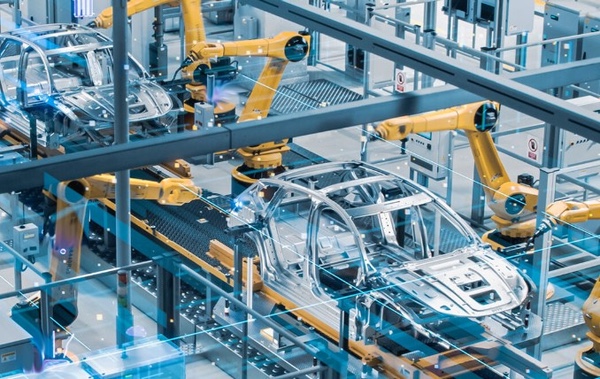
By 2025, automation has established itself as the central axis of the transformation of the automotive industry in Spain. With a production network that includes manufacturers such as SEAT (Volkswagen Group), Stellantis, Mercedes-Benz, and Ford, along with an extensive network of Tier 1 and Tier 2 suppliers, the country faces the challenge of maintaining its competitiveness in an increasingly demanding and digitalized global market.
Automation not only responds to the need for efficiency, but is also key to addressing challenges such as electrification, demand customization, sustainability, and the shortage of skilled talent. In this article, we explore how automation is reconfiguring Spanish plants, which technologies are leading this evolution, and what implications it has for industrial engineers.
The Spanish Automotive Ecosystem in the Face of Automation
Spain is the second-largest vehicle producer in Europe and one of the world's leading exporters. Automation is being rapidly deployed in plants such as Martorell (SEAT), Vigo and Zaragoza (Stellantis), Almussafes (Ford), and Vitoria (Mercedes-Benz), where advanced solutions are being implemented to automate assembly, inspection, internal logistics, and traceability tasks.
These projects are part of industrial digitalization strategies and supported by European funds (NextGenerationEU), as well as by the Electric and Connected Vehicle (EV) PERTE (Perte) programs, which incentivize the technological modernization of the entire value chain.
Key Technologies in Spanish Plants
a) Cobots and Autonomous Robotics
Collaborative robots have gone from being pilot units to becoming an essential part of production lines. They are used for screwdriving tasks, applying adhesives, or handling components in shared work cells, improving ergonomics and reducing the risk of operator injuries.
b) Machine Vision and 100% Automated Inspection
Using high-resolution camera systems and locally trained AI algorithms, fully automated visual inspection of parts and bodies is achieved. This drastically reduces quality defects and enables real-time traceability.
c) Logistics 4.0: AGVs and Intelligent Transport Systems
In factories like the one in Vigo, AGVs (automated guided vehicles) are replacing traditional material supply, integrating with MES and ERP systems to manage inventories and delivery times with millimeter precision.
d) Digital Twins and Flow Simulation
With tools such as Siemens Tecnomatix, Dassault DELMIA, or Rockwell Arena, complete assembly lines are simulated before their physical implementation. These simulations make it possible to predict bottlenecks, validate processes, and optimize the layout virtually.
The Role of the Engineer in the Automated Factory
Industrial and mechatronics engineers are increasingly taking on hybrid roles. Cross-disciplinary knowledge is required, covering PLC and robot programming, SCADA/MES system integration, industrial data analysis, OT cybersecurity, and collaborative system design.
21st-century engineering requires mastery of environments such as TIA Portal, RobotStudio, TwinCAT, or Industrial Python, as well as soft skills such as agile project management and interdepartmental work in multidisciplinary environments.
Challenges for the Spanish Industry
• Lack of qualified technical personnel: Many Spanish companies are struggling to fill technical positions in automation, robotics, and digitalization.
• Technological fragmentation in SMEs: Although OEMs are making significant progress, many small suppliers have not yet begun their digital transformation.
• Interoperability between systems: Integrate technologies from different manufacturers and ensure communication between Heterogeneous platforms remain a major challenge.
• Industrial cybersecurity: With the growth of IoT and connectivity, protecting production systems from cyberattacks becomes a priority.
Opportunities: Sustainability and Electric Vehicles
Automation is also driving more sustainable practices. The use of energy control systems, predictive maintenance, and flexible production allows for reduced resource consumption and optimized energy use. This is especially relevant in new electric vehicle assembly lines, where battery and electronics assembly processes require extremely high precision and traceability.
Engineering as a Driver of Change
Automation in the Spanish automotive industry is not just a technological trend, but a strategic lever for facing the future of the sector. Engineers play a central role in this change, leading the integration of technologies, solving complex problems, and redesigning processes with a vision of efficiency, safety, and sustainability.
By 2025, the factory of the future is no longer an abstract concept: it is an evolving reality that is being built day by day in workshops, laboratories, and production lines across the country.
Toward Smart and Sustainable Mobility
Automation is not only changing how cars are manufactured, but also how they are conceived. From mass customization to integration with electric and autonomous vehicles, automation is the silent engine of a new era in mobility. For manufacturers, adapting to this transformation is not an option, but a strategic necessity to remain competitive.